AIM-PRO Officially Launched: Building AI Literacy Across Europe
Welcome to the debut issue of the AIM-PRO newsletter!
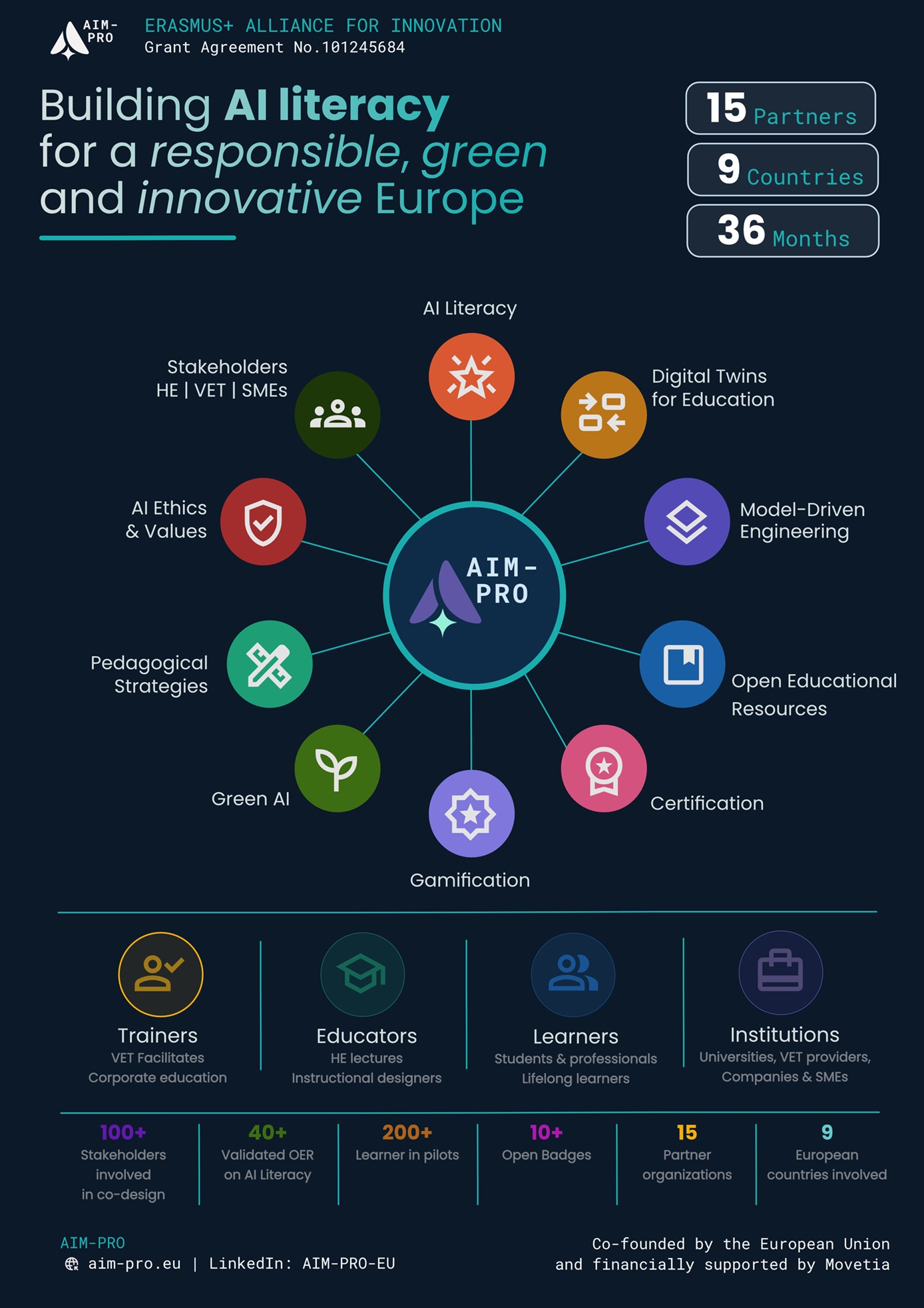
AIM-PRO (AI Literacy for Multidisciplinary Professional Readiness and Outreach) is officially underway, bringing together 15 partners across 9 European countries to advance AI literacy and innovation. This issue highlights our kick-off meeting in L’Aquila, Italy, where we mapped stakeholder needs, explored AI literacy frameworks, and launched collaborative initiatives to enhance AI literacy for education and professional training.
Discover our vision, goals and upcoming events, and learn how you can get involved in fostering AI literacy across Europe.
Empowering Europe: AIM-PRO for AI Literacy in Education and Innovation
AIM-PRO is a groundbreaking project funded under the Erasmus+ Alliance for Innovation, partially supported by Movetia - Exchange and Mobility. Over 36 months, starting 1 February 2026, this project brings together 15 partner organisations across 9 European countries, Belgium, France, Germany, Greece, Italy, the Netherlands, Slovenia, Spain, and Sweden, to drive transformative change.
Our Vision
AIM-PRO is dedicated to empowering higher education institutions (HEIs), vocational education and training providers (VETs), small and medium enterprises (SMEs), and professional trainers with cutting-edge tools, frameworks and resources. Our mission is to enhance AI literacy and integrate AI-based technologies into learning communities, fostering innovation and readiness for the future.
Our Goals
We aim to foster new connections and strengthen skills development across three key pillars:
- Deep Tech: advancing AI literacy.
- Green Skills: Promoting sustainable AI.
- Resilience & Entrepreneurship: Aligning AI with EntreComp frameworks.
By facilitating knowledge exchange and co-creation, AIM-PRO aims to bridge the gap among higher education, vocational training, research, government and businesses, driving collaborative innovation.
Our Approach
AIM-PRO harnesses four key technological approaches:
- Open Education Technology
- Generative AI
- Model-Driven Engineering
- Digital Twin Engineering.
These approaches enable us to generate, validate and pilot AI literacy content and tools across academic and professional training contexts.From stakeholder engagement and OER collection to tool development, certification with open badges, and pan-European dissemination, AIM-PRO is setting new standards for AI-driven education and professional growth.
A Gathering of Minds: Highlights from AIM-PRO Kick-off Meeting in L’Aquila
Hosted by the project coordinator, the University of L’Aquila (UDA), AIM-PRO’s kick-off meeting took place on 10-11 February in the historic city of L’Aquila. The event brought together 37 in-person participants, along with additional online participants from all 15 partner institutions, creating a vibrant mix of expertise and enthusiasm. The kick-off was inaugurated by UDA’s Rector, Prof. Fabio Graziosi, and the European Commission Representative, Mihaela Costache, setting the stage for an exciting journey ahead.
Under the guidance of Prof. Antonio Bucchiarone (UDA), AIM-PRO’s Scientific Coordinator, the AIM-PRO team took turns in presenting the project’s vision, goals and roadmap, sparking enthusiasm and collaboration among all on-site participants.
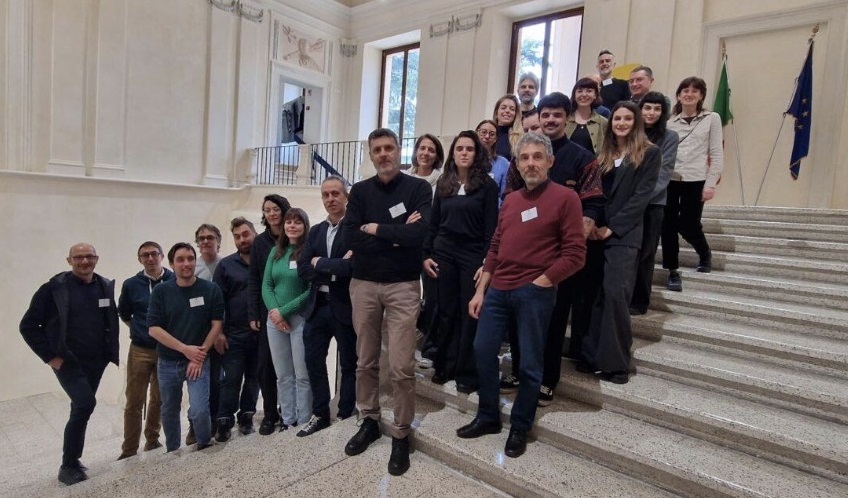
AIM-PRO kick-off meeting at L’Aquila.
Day 1: Laying the Foundations
Understanding Needs with Empathy Map
The University of Pisa (UNIPI) led a dynamic Needs Analysis Workshop, adopting the Living Lab philosophy and a structured Empathy Map methodology. Together we explored the needs of Higher Education, VETs and SMEs, uncovering cross-cutting needs as follows:
- Clear and non-technical explanations of AI concepts
- Modular and time-efficient learning pathways
- Structured ethical guidelines and certification mechanisms
- Sustainability integration
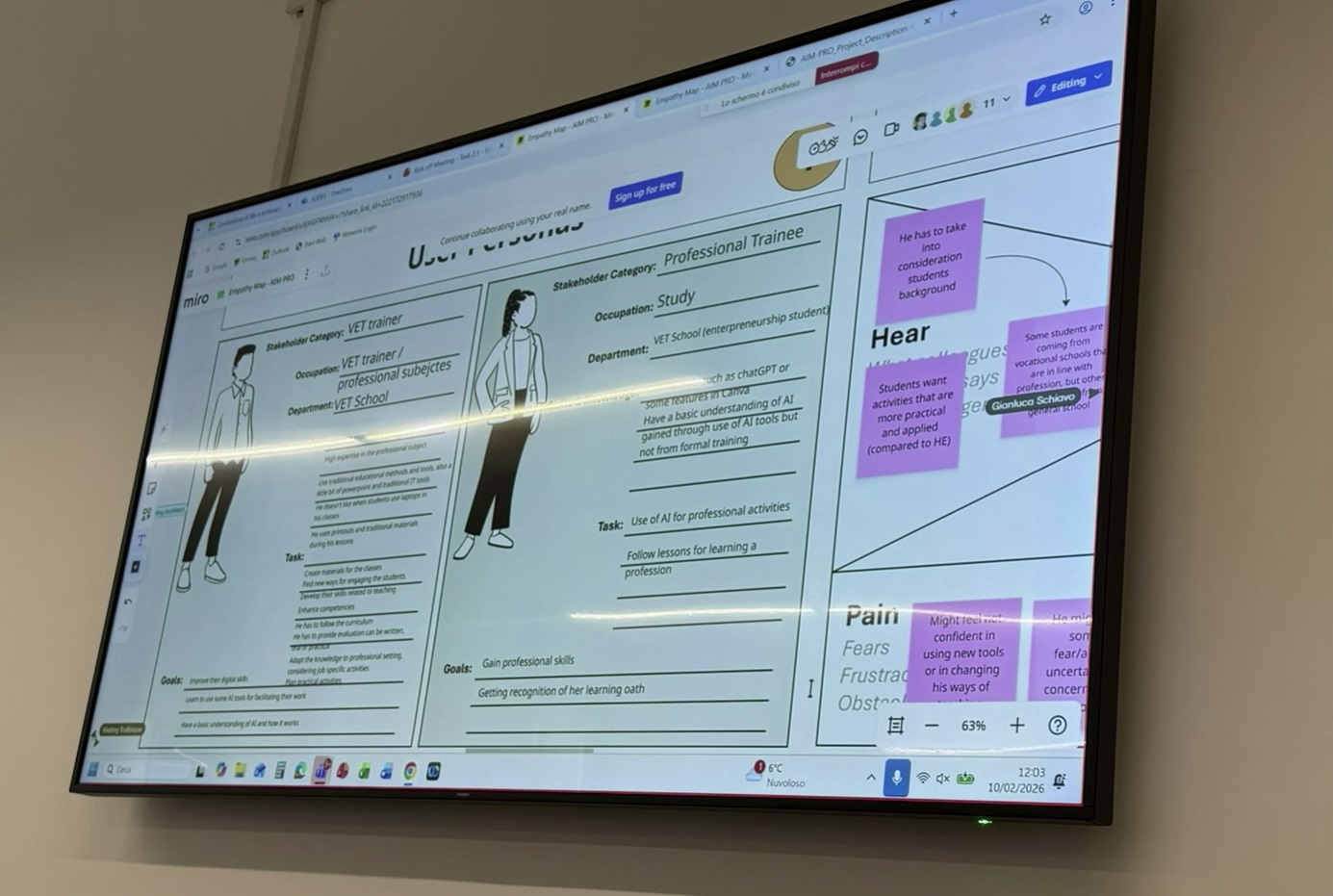
Learning about the empathy map methodology during the Needs Analysis Workshop led by UNIPI.
These insights will continue to guide our discussions and developments throughout the project, ensuring that AIM-PRO delivers tailored, practical and impactful solutions for all stakeholders.
A special thank you to Filippo Chiarello, Diana Domenichini, and Alessandra Serra from UNIPI for their outstanding leadership in this Workshop, setting a strong foundation for our collaborative journey ahead!
From Ideas to Action with the Metamodel
In this session, Mälardalens University (MDU) and UDA demonstrated how stakeholder requirements will be transformed into a shared domain metamodel using the cloud-based Jjodel platform. This innovative approach integrates:
- AI literacy competencies
- Sustainability indicators
- Personalisation mechanisms
The metamodel will serve as the backbone of AIM-PRO, ensuring consistency and coherence across all tools and platforms. We extend our gratitude to Antonio Cicchetti (MDU) and Alfonso Pierantonio (UDA) for expertly guiding this session.
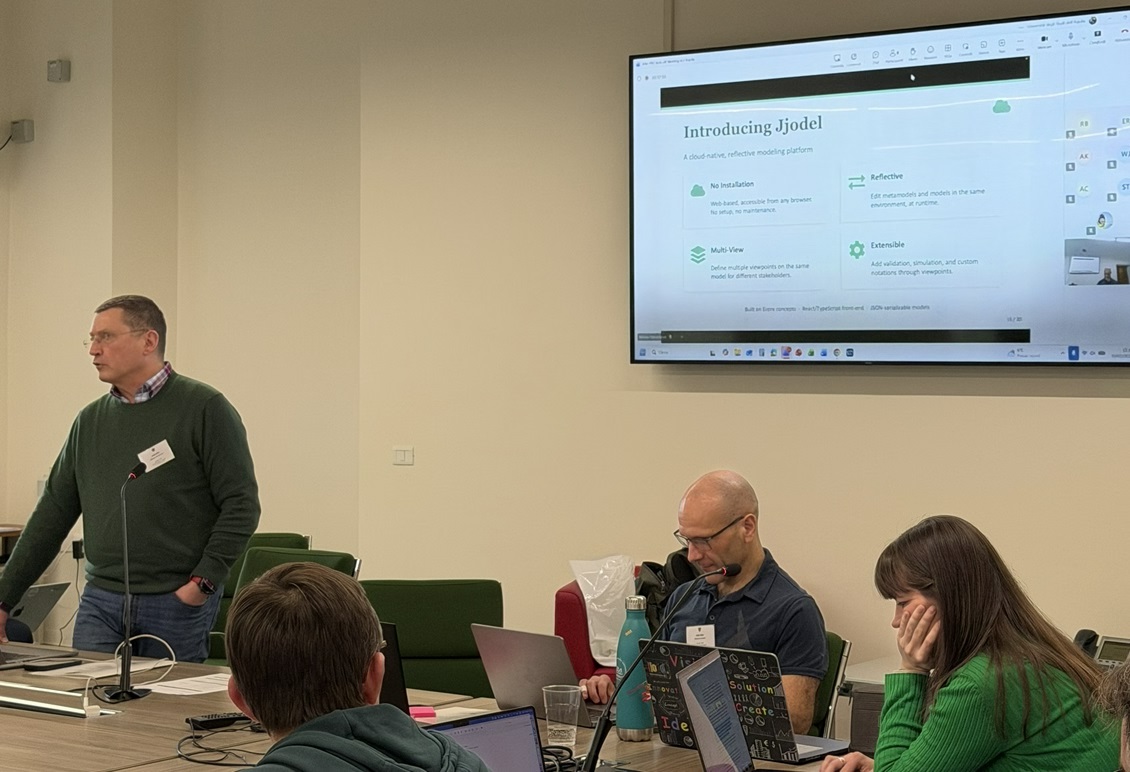
Alfonso Pierantonio (UDA) presents the Jjodel platform at the meeting.
Unifying Models for AI Literacy
Andrea Vázquez Ingelmo from the University of Salamanca (USAL) continued in a new session, presenting USAL’s metamodel synthesising DigComp, UNESCO AI frameworks, GreenComp, and EntreComp frameworks into a unified structure. USAL also introduced the graph-based Open Educational Resources (OER) database architecture for the Project’s Work Package 3, focusing on building and providing access to AI literacy resources. This approach enables semantic navigation, competency-gap detection, and compatibility with AI recommendation agents developed in the Project’s Work Package 4, which aims to support educators and learners with personalised AI literacy tools.
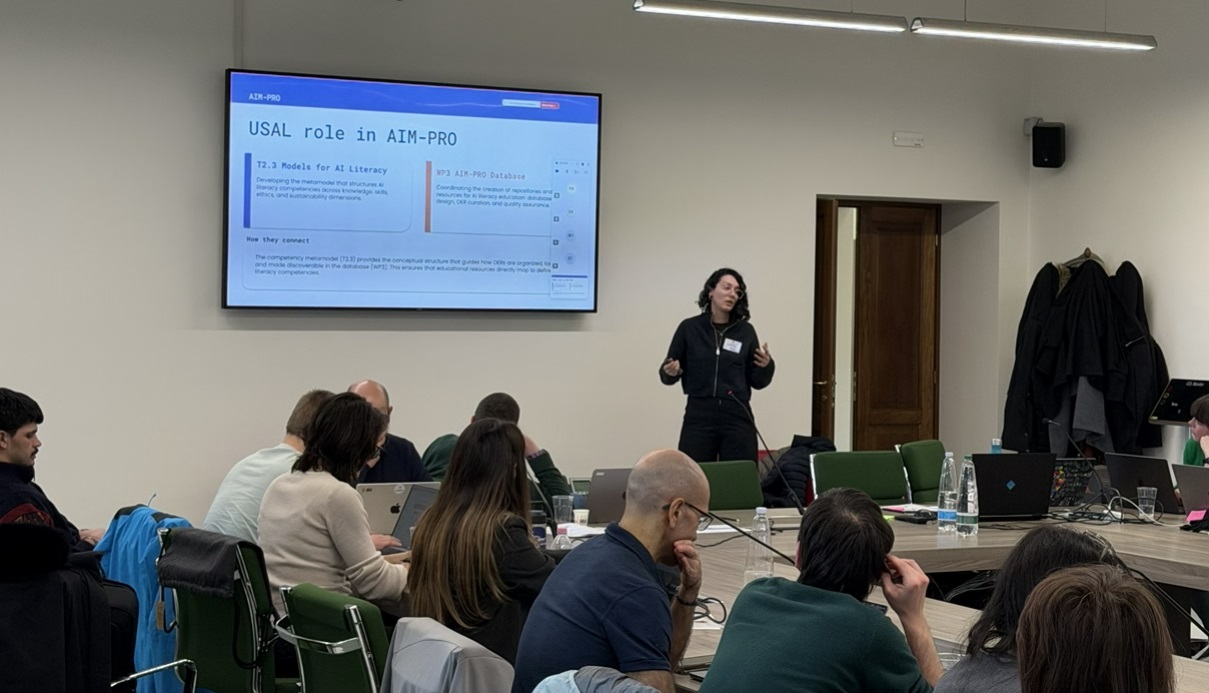
Andrea Vázquez Ingelmo (USAL) shares insights on integrating AI frameworks into AIM-PRO’s unified structure.
Balancing Innovation and Environmental Responsibility
The University of Rennes (REN) brought a fresh perspective to the next session with their work on green computing, assessment and personalization. Olivier Barais (DiverSE/IRISA, REN) presented virtually their work, which embeds measurable sustainability indicators, energy consumption, CO2 emissions, hardware resource usage, directly into the AIM-PRO metamodel. The team also introduced a recommender system for sustainable AI literacy pathways, balancing AI performance, environmental footprint, and contextual relevance.
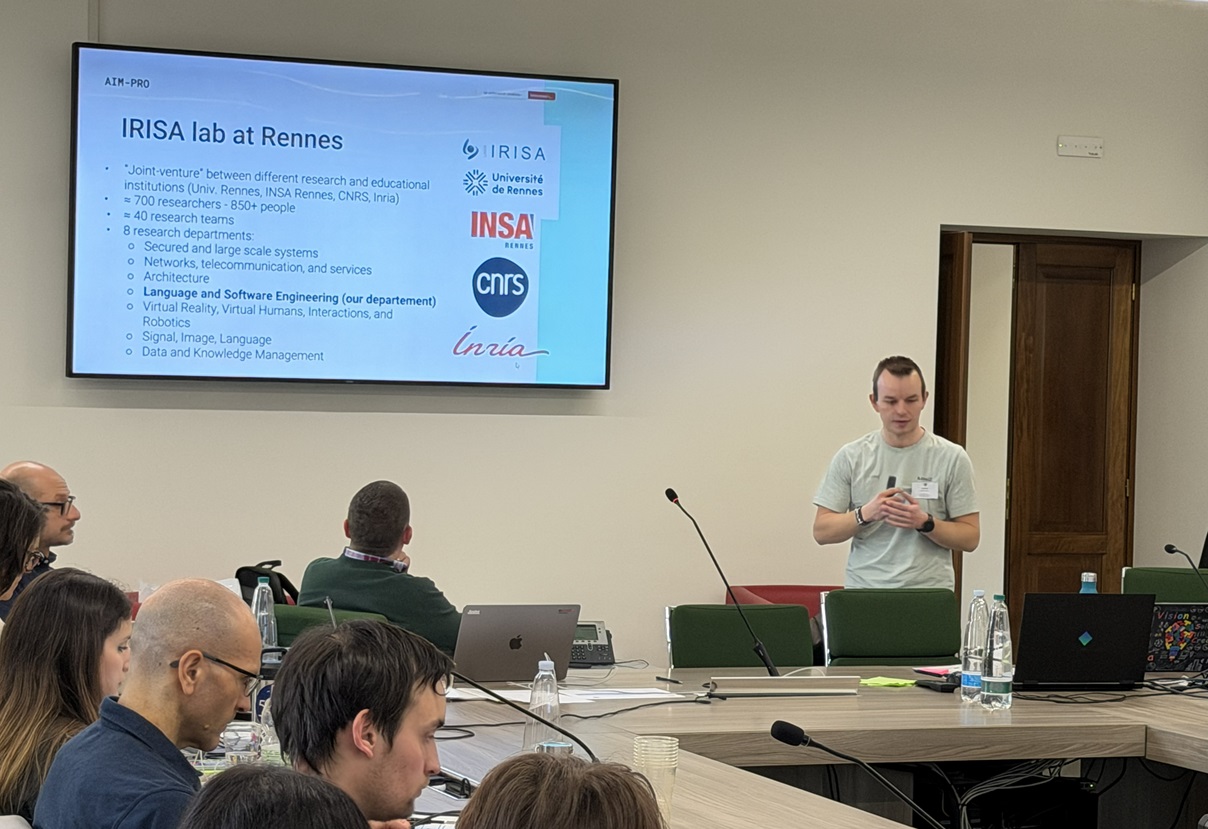
Quentin Perez (IRISA, REN) presents REN’s role in AIM-PRO project.
Developing Evidence-based Pedagogy with AI
The Vrije Universiteit Brussel (VUB), represented by Jo Tondeur, presented VUB’s evidence-based approach using the Intelligent Synthesis of Qualitative Data (iSQD) methodology, drawing from a systematic review of 600+ studies. Three key strategy clusters were identified: familiarisation through hands-on exploration, collaborative design with AI as co-creator, and authentic practice cycles in realistic professional scenarios.
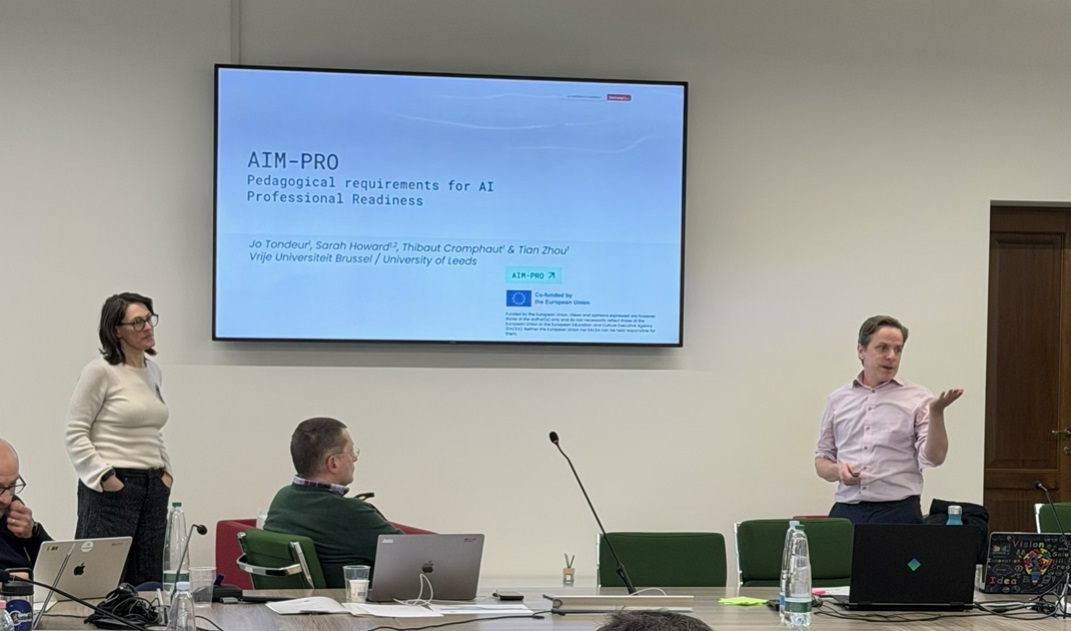
Sarah Howard (left) from the University of Leeds and Jo Tondeur (right) from VUB, discuss evidence-based pedagogy strategies for AIM-PRO.
Empowering Learners with the AIM-PRO Certification Framework
Witold Jacak from the European IT Certification Institute (EITCI) presented a revolutionary approach to assessing and certifying AI literacy skills. The “atomized” assessment model breaks down each learning objective into granular evidence of mastery. The framework includes open badges, LinkedIn-compatible digital credentials, a curriculum digital twin, and AI-supported examination preparation. All aligned with EQF levels 5 and 6, this certification framework is designed to empower learners with recognised, portable credentials, bridging education and career advancement in the AI-driven world.
The roadmap for the development of the AIM-PRO learning Toolchain
To wrap up day 1 of the kick-off meeting, Juri Di Rocco (UDA) presented the Project’s Working Package 4: a two-phase roadmap featuring core tool development and refinement. The Model Context Protocol (MCP) was introduced as the key architectural standard for interoperability between AI tutors, the OER repository, and learning tools.
Day 2: Innovating for Impact and Engagement
Revolutionising Knowledge Navigation with GraphRAG
Riccardo Belliato from Fondazione Bruno Kessler (FBK) proposed a GraphRAG architecture aligned with the IEEE P2807.6 Educational Knowledge Graph (EduKG) standard. Unlike vector-based RAG systems, GraphRAG encodes domain concepts, relationships, and pedagogical structures graphically, enabling semantic navigation, advanced content retrieval, and explainable AI-supported learning.
This innovation ensures that learners can interact with AI-driven educational content more naturally and effectively.
Gamifying AI Literacy for Maximum Engagement
Eftychia Roumelioti and Annapaola Marconi (FBK) presented a competency-driven gamification approach drawing on lessons from prior Erasmus+ projects (StandByMe and Cesagram). The strategy incorporates AI ethics quests, Green AI challenges, adaptive learning pathways, and collaborative mechanics to sustain engagement across HE, VET, and SME learners.
Stakeholder Network Mapping for Real-World Needs
Gianluca Schiavo from FBK, Maaike Harbers and Isabella Voskuil from Rotterdam University of Applied Sciences (RUAS) led an interactive network-mapping session to identify HE, VET, and SME communities for future piloting and dissemination. While the official start of their work package is still on the horizon, the team proactively initiated stakeholder engagement during this kick-off meeting, ensuring AIM-PRO’s initiatives are deeply rooted in real-world needs and practical insights from day one.
A Unified Voice for AIM-PRO
Nuria Anguera from Informatics Europe (IE) unveiled the unified visual identity, chosen through a consortium survey, along with a collaborative communication plan for the Project. Highlights include a GitHub-based collaborative website infrastructure, and a communication plan with rotating LinkedIn posts contributed by all project partners and quarterly newsletters throughout the project’s period. This cohesive approach ensures that AIM-PRO’s message is clear, consistent and far-reaching, setting the stage for successful collaboration and outreach.
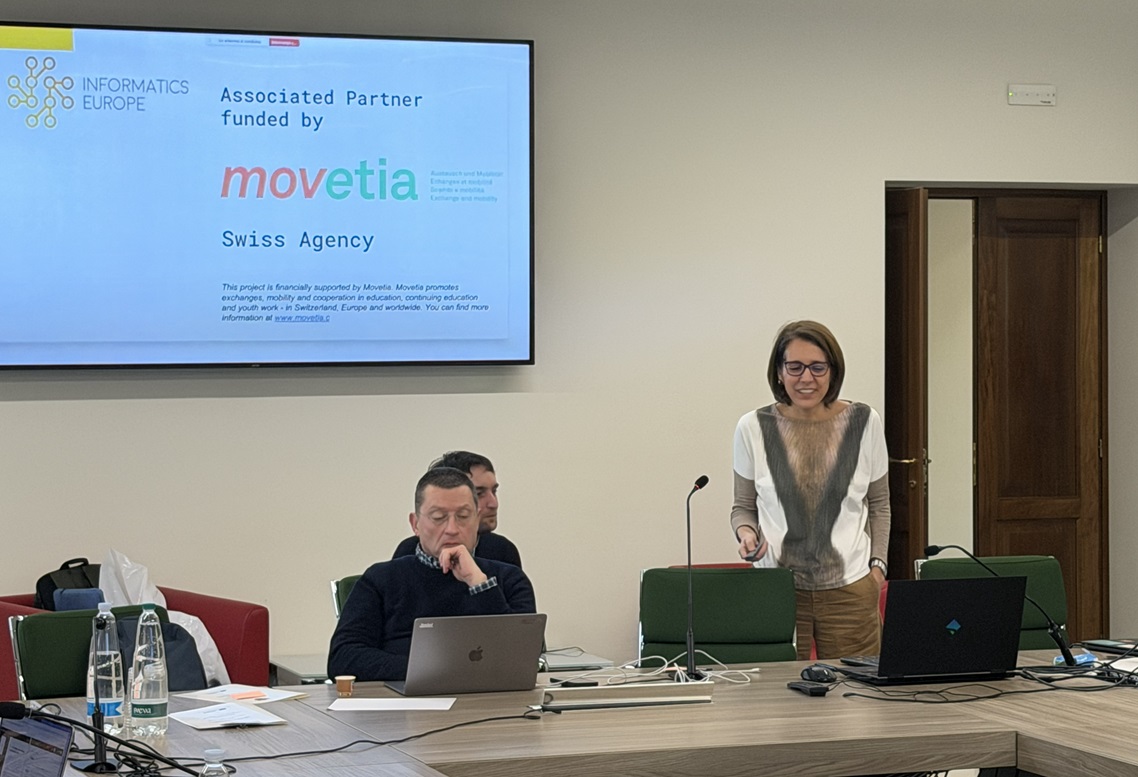
Nuria Anguera (standing, right) from IE presented AIM-PRO’s dissemination strategy in shaping the Project’s outreach and impact.
Looking Ahead: AIM-PRO at a Glance
We are deeply grateful for the dedication and expertise that all partners brought to the kick-off meeting, setting a strong foundation for AIM-PRO’s success.
As we embark on this journey, we look forward to the inspiring collaborations and milestones ahead. Stay connected and discover AIM-PRO at a glance: download our project flyer below, highlighting our objectives, activities and diverse communities we aim to empower.
Join us on this impactful journey to advance AI literacy across Europe!
Upcoming Events: Second Consortium Meeting and Webinars
Hosted by the University of Rennes (DiverSE / IRISA team), the second in-person consortium meeting will take place on 20-21 October 2026, serving as the first major operational checkpoint for AIM-PRO. Partners will review the AIM-PRO Conceptual Model defined in Project’s Work Package 2, consolidate the Project Work Package 3 & 4’s Knowledge Graph architecture alignment, and advance metamodeling activities, covering AI literacy learning scenarios, competencies, and green computing principles.
Further events over the project lifetime include 4 consortium webinars, in-person dissemination events in each of the 9 participating countries, and a final blended international conference. Stay updated on our progress, stories and upcoming events by subscribing to our quarterly newsletter and following us on LinkedIn, YouTube and Zenodo.
That’s it for our debut newsletter. Thank you for reading! We’ll be back in July 2026 with next updates and stories.
AIM-PRO Project - 101245864 | Funded by the European Union
Read more at: https://aim-pro.eu/newsletters/2026-04-newsletter